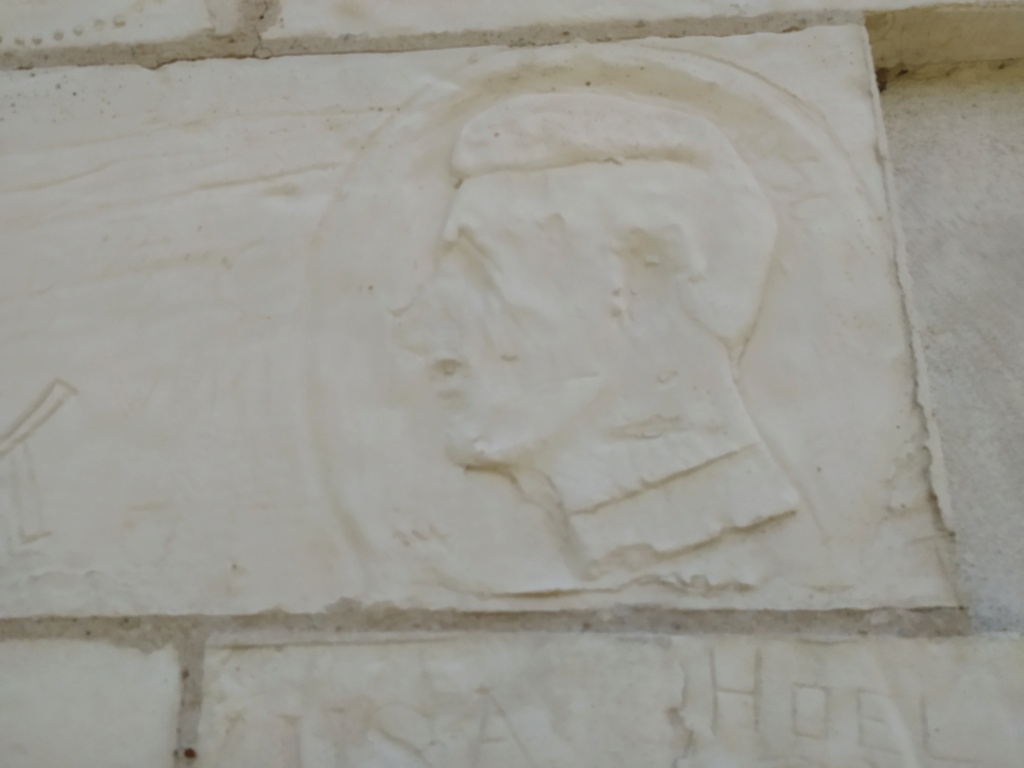






American Graffiti (1917-1919) Monument
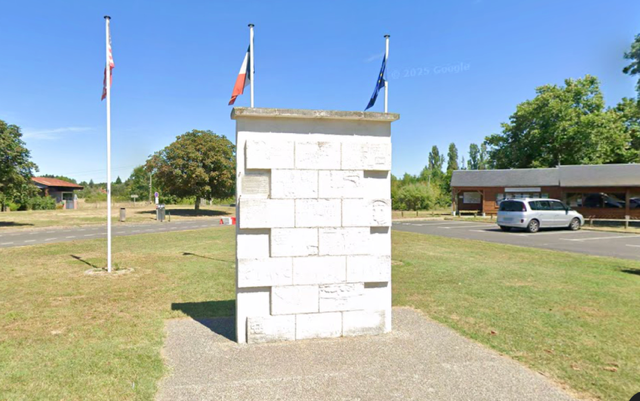
Details:
In the rest area next to the WW1 Museum.
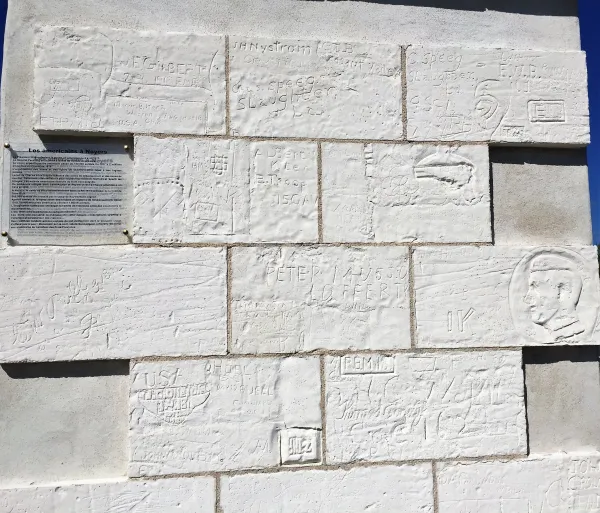
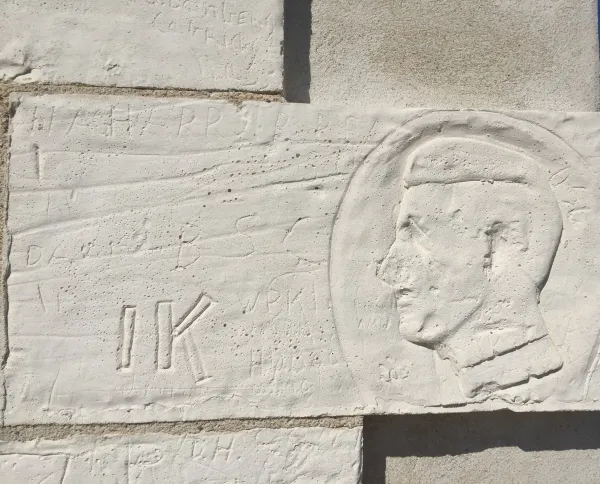
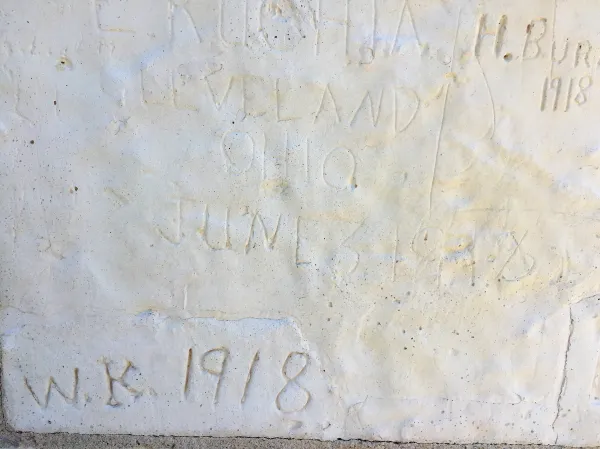
MonumentA wall-like structure with pieces of local buildings with graffiti etched on them; includes a small information panel on the back remembering the American presence in the area during WW1.
The memorial remembers the many thousands of Americans stationed here and who passed through this area from 1917 to 1919 during World War 1. Noyons-sur-Cher series of bases was part of the American Expeditionary Forces (AEF) Services and Supply Intermediate Zone logistics effort.
Monument Text:
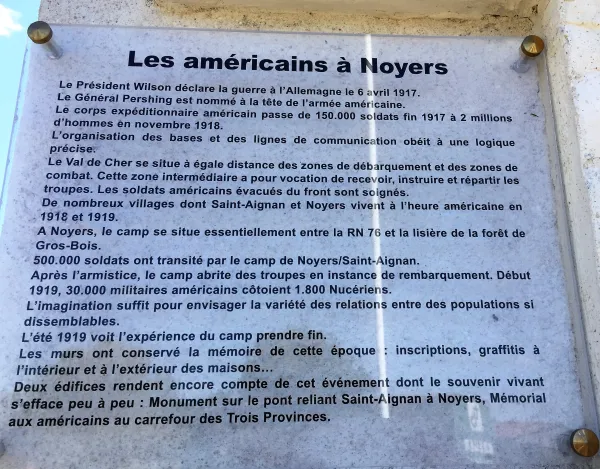
The plaque on the back is written in Frnch and reads:
Les américains à Noyers
Le Président Wilson déclare la guerre à l'Allemagne le 6 avril 1917.
Le Général Pershing est nommé à la tête de l'armée américaine.
Le corps expéditionnaire américain passe de 150.000 soldats fin 1917 à 2 millions d'hommes en novembre 1918.
L'organisation des bases et des lignes de communication obéit à une logique précise.
Le Val de Cher se situe à égale distance des zones de débarquement et des zones de combat. Cette zone intermédiaire a pour vocation de recevoir, instruire et répartir les troupes. Les soldats américains évacués du front sont soignés.
De nombreux villages dont Saint-Aignan et Noyers vivent à l'heure américaine en 1918 et 1919.
A Noyers, le camp se situe essentiellement entre la RN 76 et la lisière de la forêt de Gros-Bois.
500.000 soldats ont transité par le camp de Noyers/Saint-Aignan.
Après l'armistice, le camp abrite des troupes en instance de rembarquement. Début 1919, 30.000 militaires américains côtoient 1.800 Nucériens.
L'imagination suffit pour envisager la variété des relations entre des populations si dissemblables.
L'été 1919 voit l'expérience du camp prendre fin.
Les murs ont conservé la mémoire de cette époque: inscriptions, graffitis à l'intérieur et à l'extérieur des maisons...
Deux édifices rendent encore compte de cet événement dont le souvenir vivant s'efface peu à peu: Monument sur le pont reliant Saint-Aignan à Noyers, Mémorial aux américains au carrefour des Trois Provinces.
English:
Americans in Noyers
President Wilson declared war on Germany on April 6, 1917.
General Pershing was appointed commander of the American army.
The American Expeditionary Force grew from 150,000 soldiers at the end of 1917 to 2 million men by November 1918.
The organization of bases and lines of communication followed a precise logic.
The Cher Valley was located equidistant from the landing zones and the combat zones. This intermediate zone was designed to receive, train, and distribute troops. American soldiers evacuated from the front were cared for there.
Many villages, including Saint-Aignan and Noyers, lived according to American time in 1918 and 1919.
In Noyers, the camp was located primarily between the RN 76 highway and the edge of the Gros-Bois forest.
500,000 soldiers passed through the Noyers/Saint-Aignan camp.
After the armistice, the camp housed troops awaiting re-embarkation. In early 1919, 30,000 American soldiers lived alongside 1,800 locals. One can easily imagine the diverse relationships between such disparate populations.
The summer of 1919 marked the end of the camp's existence.
The walls still bear witness to this era: inscriptions and graffiti inside and outside the houses. Two monuments still commemorate this event, the memory of which is gradually fading: the monument on the bridge connecting Saint-Aignan to Noyers, and the American memorial at the Trois Provinces crossroads.