





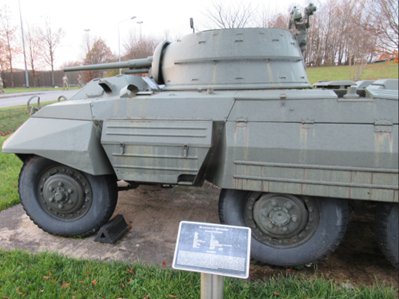
M8 Greyhound Armored Car
Details:
On the west side of the monument.
Combat VehicleThe 2d Cavalry Group -- 2d Cavalry Regiments predecessor, known as the Ghosts of Pattons Third Army -- used vehicles of this type in World War II.
Source of photos: Jim Yentz
Monument Text:
On the placard text:
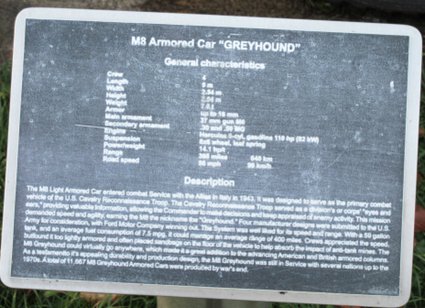
M8 Armored Car GREYHOUND
General Characteristics
|
Crew |
4 |
|
Length |
5 m |
|
Width |
2.54 m |
|
Height |
2.04 m |
|
Weight |
7.0 t |
|
Armor |
up to 10 mm |
|
Main armament |
37 mm gun M6 |
|
Secondary armament |
.30 and .50 MG |
|
Engine |
Hercules 6-cyl gasoline 110 hp (82 kW) |
|
Suspension |
6x6 wheel, leaf spring |
|
Power/weight |
14.1 hp/t |
|
Range |
398 miles 640 km |
|
Road Speed |
56 mph 90 km/h |
Description
The M8 Light Armored Car entered combat Service with the Allies in Italy in 1943. It was designed to serve as the primary combat vehicle of the U.S. Cavalry Reconnaissance Troop. The Cavalry Reconnaissance Troop served as a divisions or corps eyes and ears, providing valuable information, allowing the Commander to make decisions and keep appraised of enemy activity. This mission demanded speed and agility, earning the M8 the nickname the Greyhound. Four manufacturer designs were submitted to the U.S. Army for consideration, with Ford Motor Company winning out. The System was well liked for its speed and range. With a 59 gallon tank, and an average fuel consumption of 7.5 mpg, it could manage an average range of 400 miles. Crews appreciated the speed, but found it too lightly armored and often placed sandbags on the floor of their vehicle to help absorb the impact of anti-tank mines. The M8 Greyhound could virtually go anywhere, which made it a great addition to the advancing American and British armored columns. As a testament to its appealing durability and production design, the M8 Greyhound was still in Service with several nations up to the 1970s. A total of 11,667 M8 Greyhound Armored Cars were produced by the wars end.