





Truman House
Details:
On the east side of the road.
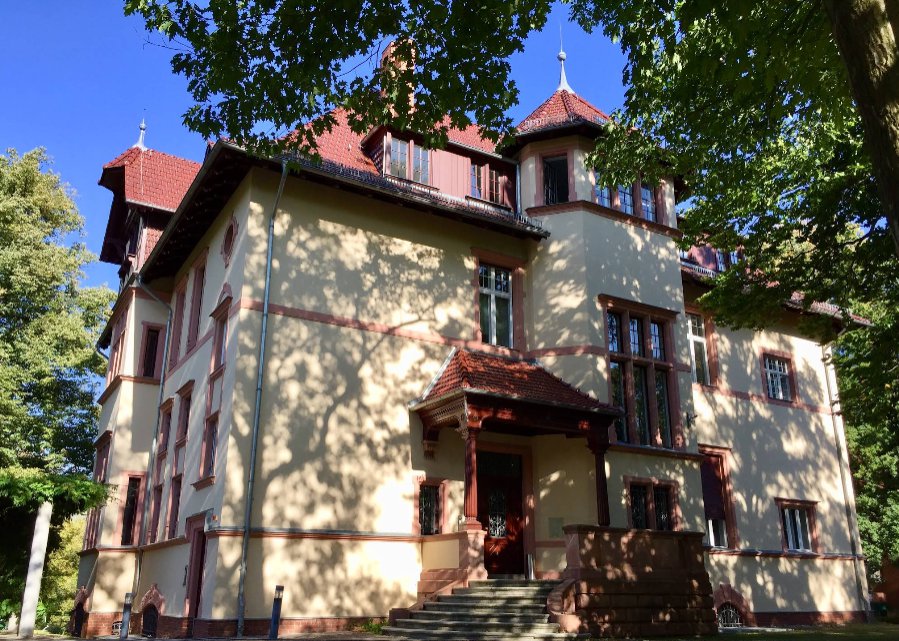
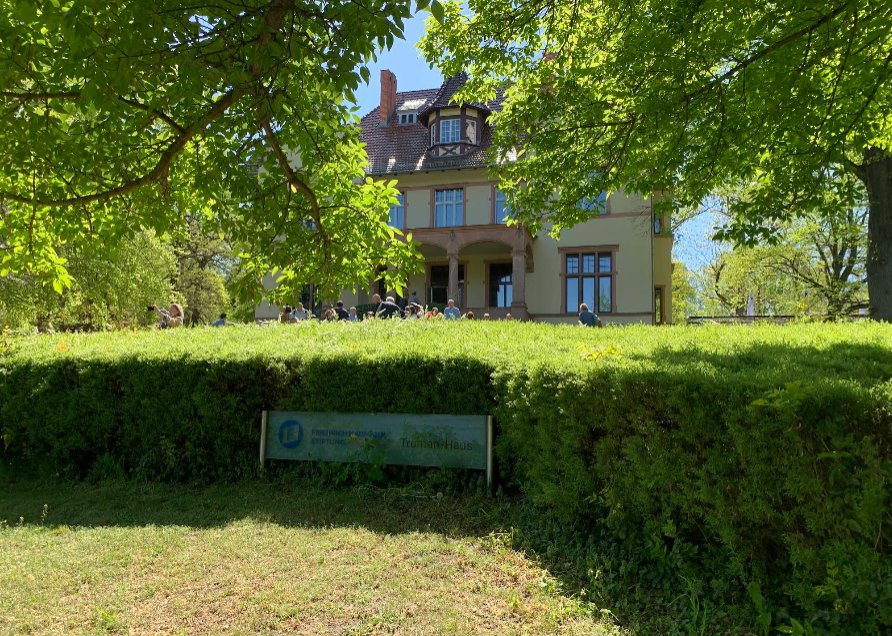
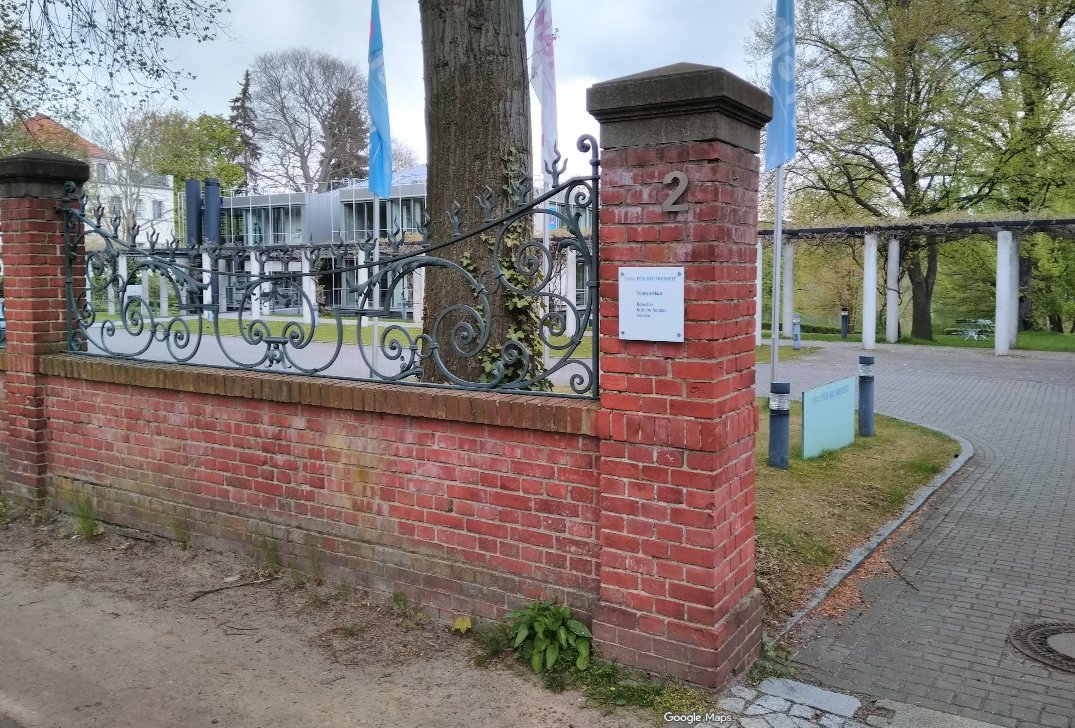
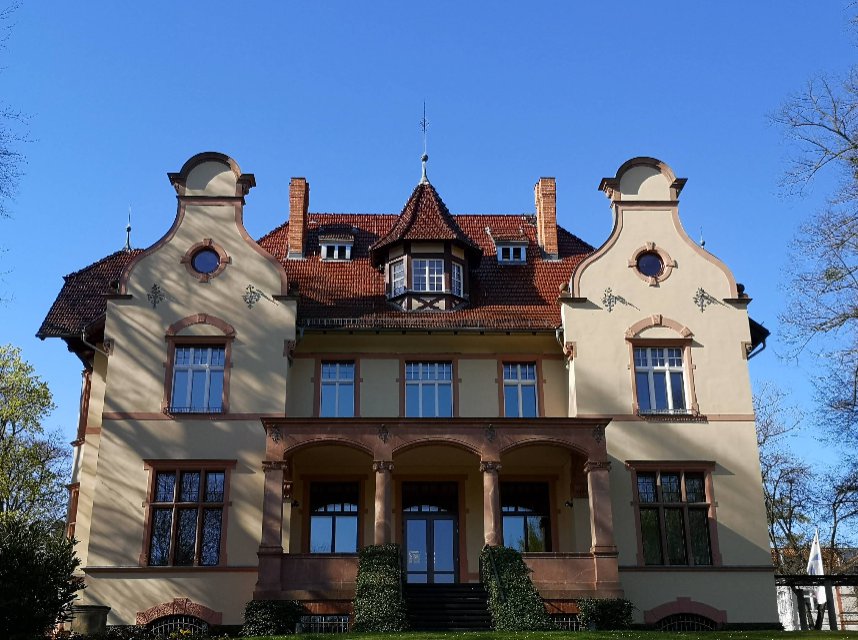
Commemorative ObjectThe so-called Truman House (also known as Truman-Haus or Truman-Villa) is where U.S.President Harry S. Truman lived during the Potsdam Conference in 1945. During his stay, Truman called the residence the Little White House, but today its named after him. The building now serves as the headquarters of the international organization Friedrich Naumann Foundation for Freedom.
The Big Three -- Soviet leader Joseph Stalin, British Prime Minister Winston Churchill (replaced on 26 July by Prime Minister Clement Attlee), and U.S. President Harry Truman -- met in Potsdam, Germany, from 17 July to 2 August 1945, to negotiate terms for the end of World War II and discuss frameworks for the post-war order. In one significant outcome, the United States, the United Kingdom, and China released on 26 July 1945 the Potsdam Declaration, which threatened Japan with prompt and utter destruction if it did not immediately surrender (the Soviet Union did not sign the declaration because it had yet to declare war on Japan).
The Potsdam Conference is perhaps best known for President Trumans 24 July 1945 conversation with Stalin, during which the President informed the Soviet leader that the United States had successfully detonated the first atomic bomb on 16 July 1945. Historians have often interpreted Trumans somewhat firm stance during negotiations as the U.S. negotiating teams belief that U.S. nuclear capability would enhance its bargaining power. Stalin, however, was already well-informed about the U.S. nuclear program thanks to the Soviet intelligence network; so he also held firm in his positions. This situation made negotiations challenging. The leaders of the United States, Great Britain, and the Soviet Union, who, despite their differences, had remained allies throughout the war, never met again collectively to discuss cooperation in postwar reconstruction.
Eleven days after the release of the Potsdam Declaration, on 6 August 1945, having received no reply, the American bomber Enola Gay (B-29-45-MO, Serial Number 44-86292) left Tinian Island en route toward Japan to deliver the Little Boy bomb over Hiroshima. On 9 August 1945, the American bomber Bockscar (B-29-36-MO, Serial Number 44-27297) delivered the Fat Man bomb over Nagasaki. Both cities were leveled by the strikes, and this forced the Japanese Emperor, without his Cabinets consent, to decide on unconditional surrender to end the Pacific war on 10 August 1945.
President Truman maintained that using atomic bombs in 1945 was a necessary, awful responsibility to end World War II quickly, save American and Japanese lives by avoiding a ground invasion, and retaliate for Pearl Harbor. He described the weapon as the most terrible bomb in the history of the world and viewed it as a legitimate, powerful weapon in the arsenal of righteousness, often stating he had no regrets and would do it again.
Source of information: hiroshima-nagasaki-platz.de, www.potsdam-wiki.de, www.atlasobscura.com
Monument Text:
Commemorates:
People:
Wars:
WWII
Battles:
Pacific Theater
Other images :