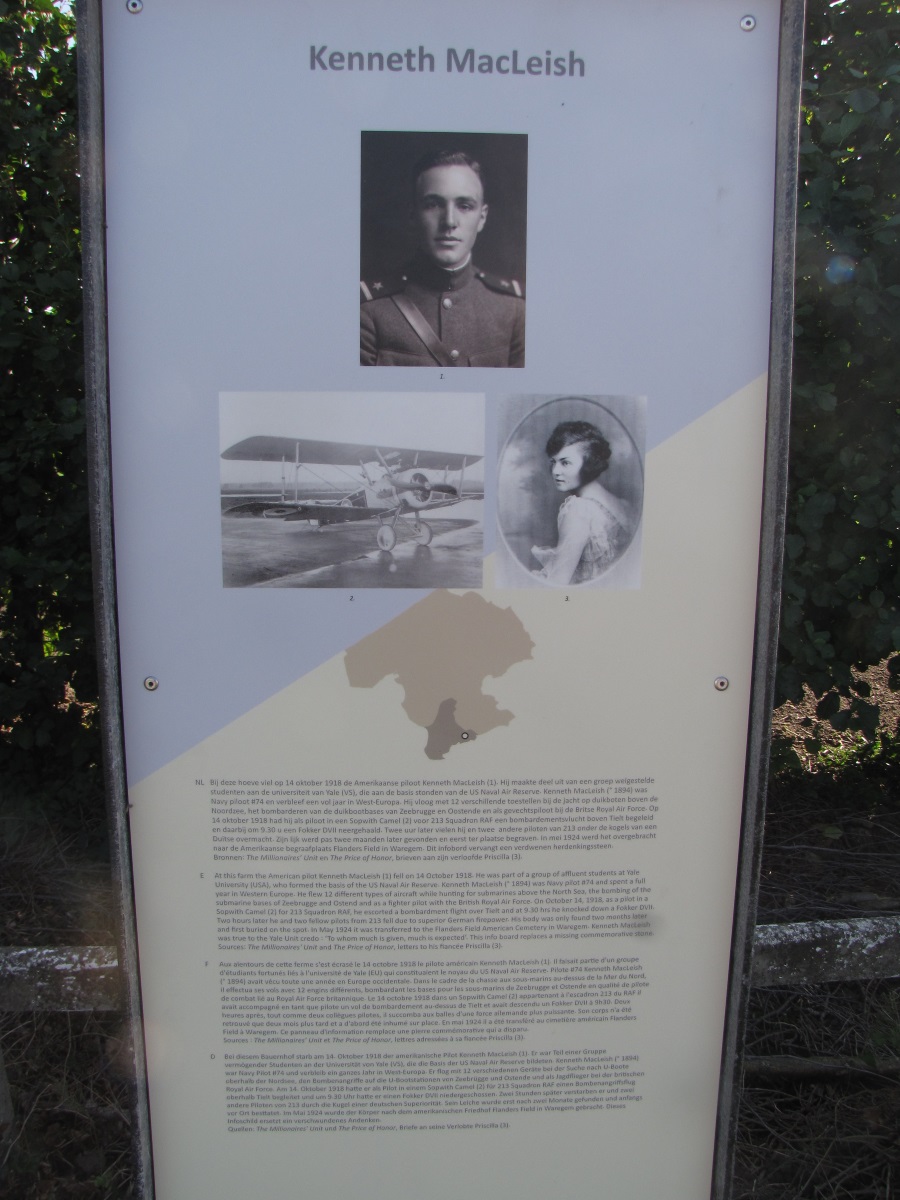






LT Kenneth MacLeish Crash Marker - US Navy Aviation, WW1
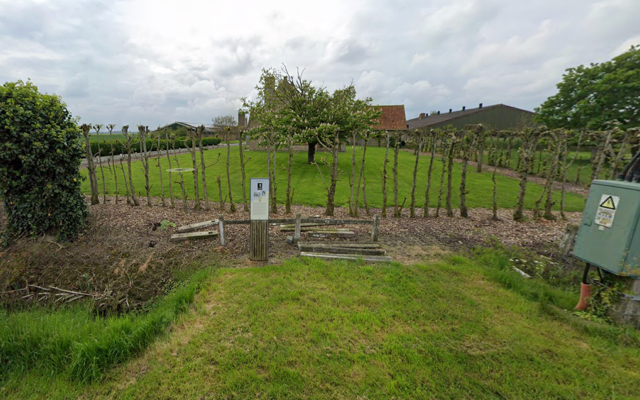
Details:
In front of a private farm just off a narrow farm road.
MarkerAn upright marker with a picture of MacLeish and his fiancé, Priscilla Murdoch, and an aircraft he flew.
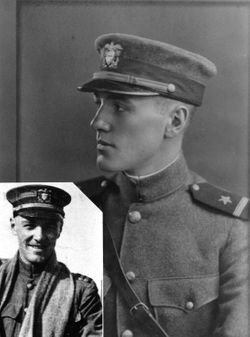
The marker replaces a commemorative stone which marked the location where LT Kenneth MacLeish crashed in his Sopwith Camel on October 14, 1918. MacLeish was the brother of the Poet, Playwright, statesman and WW1 Veteran Archibald MacLeish. Archibald MacLeish (1892-1982). American author, poet and Librarian of Congress. U.S. Army ambulance driver ( Yale Mobile Hospital Unit), and an artillery captain (146th Field Artillery Regiment) and fought in the Second Battle of the Marne.
Kenneth MacLeish was part of the "First Yale Unit". The First Yale Unit, besides being the first United States Naval Air Reserve unit, achieved many firsts in World War I as they proved the potential of aviation in national defense. This was a group of men who took it upon themselves to begin training as military pilots even before the United States entered the war and deemed it necessary to fund aviation development. They are sometime referred to as the "Millionaire's Unit".
LT Kenneth MacLeish became Naval Aviator # 74 and in October of 1917, he shipped to Europe, and trained with the British Royal Air Force for several months. He learned to fly a variety of aircraft, including the French FBA Flying Boats, Hanriot-Dupont Scouts, and Breguet Bombers. He also learned to fly the British DH9s, and the Sopwith Camel. Of all of the aircraft, Kenneth loved the Sopwith Camel the most. It was the fastest aircraft the British had during the war.
As of March 1918, Kenneth entered active combat when he was sent to Dunkirk in France. He served in several different duty stations with the British, and in several different squadrons RAF 213 Squadron & the Northern Bombing Group), both in France and in England. He acquired considerable combat experience in escorting ships, bombing enemy targets, and engaging in air-to-air dogfights with the Germans.
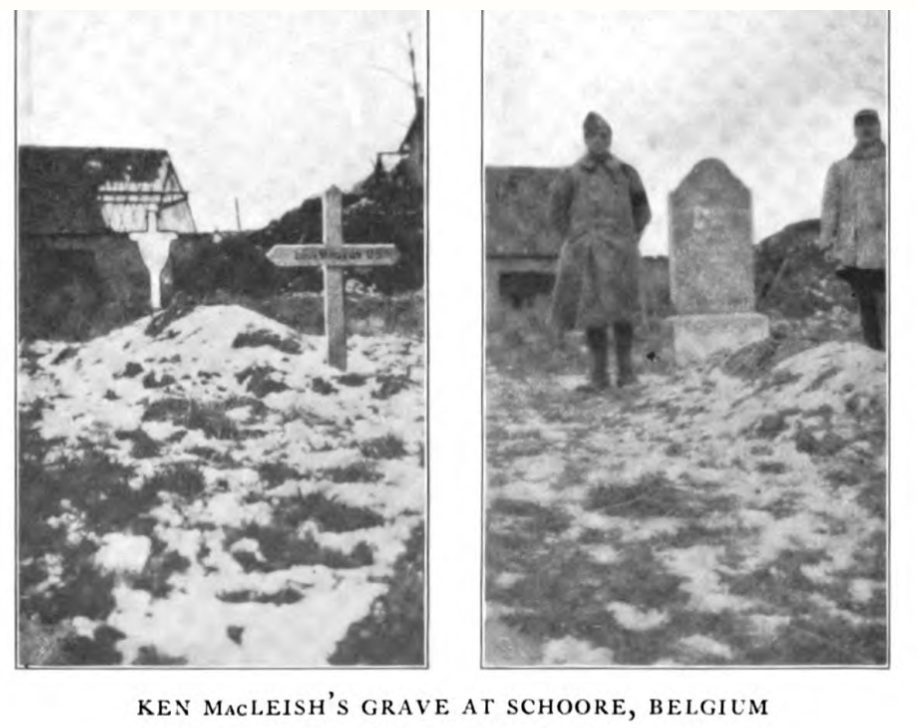
On 14 October 1918, Kenneth went out on a morning patrol with the Royal Air Forces 213th Squadron based in Dunkirk. He was flying one of his beloved Sopwith Camels. It was a successful mission in which he shot down a German plane and returned safely to base. However, that afternoon, Kenneth took his Sopwith Camel back up on another patrol, and never came back crashing at this location in Schore Belgium on the Rouse Farm. MacLeish was buried at this location until he was moved to his permanent burial at the Flanders Field American Cemetery in Belgium. MacLeish was posthomuosly awarded the Navy Cross for his actions.
His brother, the poet, wrote a poem inspired by the death of his brother:
The Young Dead Soldiers Do Not Speak:
The young dead soldiers do not speak
Nevertheless they are heard in the still houses: who has not heard them? . . .
They say, Our deaths are not ours: they are yours: they will mean what you make them.
They say, Whether our lives and our deaths were for peace and a new hope or for nothing we cannot say: it is you who must say this.
They say, We leave you our deaths: give them their meaning: give them an end to the war and a true peace: give them a victory that ends the war and a peace afterwards: give them their meaning.
We were young, they say. We have died. Remember us.
Source: https://aomda.org/en/content/kenneth-macleish
https://www.hangarflying.eu
Monument Text:
The inscription on the marker is written in several langauages. The English reads:
At this farm the American pilot Kenneth Macleish fell en 14 October 1918. He was part of a group of afluent students at Yale University (USA), who formed the basis of the US Naval Air Reserve. Kenneth MacLeish (1894) was Navy pilot # 74 and spent a full year in Western Europe. He flew 12 different types of aircraft while hunting for submarines above the North See, the bombing of the submarine bases at Zeebrugge and Ostend and as a Fighter pilot with the British Royal Air Force. On October 14, 1918, as a pilot in a Sopwith Camel (2) for 213 Squadron RAF, he escorted a bombardment flight over Tielt and at 9:30 hrs he knocked down a Folker DvH. Two hours later he and two fellow plots from 213 fell due to superior German firepower. Hs body was only found two months later and first buried on the spot. In May 1924 he was transferred to the Flanders Field American Cemetery in Waregem. Kenneth Macliesh was true to the Yale unit credo: To whom much is given, much is expected.
This info board replaces a missing commemorative stone.
Sources: The Millionaires Unit and The Price of Honor, Letters to his fiancée Priscilla
Commemorates:
People:
Units:
146th Field Artillery Regiment
Naval Aviation
Royal Air Force (RAF)
U.S. Navy Air Service
United States Naval Reserve
United States Navy
Wars:
WWI
Other images :