






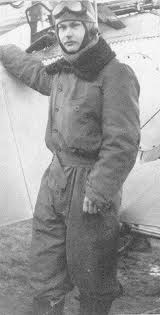
Edmond Charles Clinton Genet is honored on the following 4 monument(s) in our database:
American Volunteer Monument Paris
The Lafayette Escadrille Heroes Memorial
France Pantheon Commemorative Wall Remembering Fallen Writers (including Americans) WW1
The first American flier to die in WWI after the US entered the war. Born Ossining, NY, shot down by anti-aircraft artillery on 16 Apr 17. Genet was the great great grandson of Edmond-Charles Genêt, also known as Citizen Genêt, the French Ambassador to the United States shortly before the French Revolution who is mostly remembered for being the cause of an international incident known as the Citizen Genêt Affair.
Edmond Genet sailed for France at the end of January, 1915 to join the French Foreign Legion while on leave from the US Navy. JOined the Lafayette Escadrille on January 22d 1917 . He was 20 years old at the time of his death.
From the WW1 Commission Website:
Edmond Charles Clinton Genêt, through both his lineage and his actions, was no stranger to muddying up the waters of American and French relations. A descendant of Edmond-Charles Genêt, the bombastic French ambassador to the United States who had strenuously lobbied for American help against Britain in the 1790’s (and covertly organized mercenaries when Washington refused to help), Edmond Charles Clinton Genêt dreamed of nothing other than flying, and it pained him to hear of the exploits of European aviators during his service as a US Navy sailor. While on leave in New York, Genêt traded his US battleship for a French liner, setting sail for the front in January of 1915; technically, he had deserted, a matter that was never fully cleared up during his lifetime.
Admond Genets in the foreign LegionBy chance, Genêt was on the same ship as Norman Prince, the eventual founder of the Lafayette Escadrille, and Prince told him of his plans to form an American flying squadron. Upon arrival in France, Genêt enlisted with the French Foreign Legion, but quickly switched to the Escadrille when Prince’s request was granted. Flying was everything Genêt had dreamed of; after his first training flight, he wrote “this is what one can call the real thing… this is sport with all the fascination and excitement chances that any live fellow could ever wish for.” After his first bad crash, Genêt also learned to respect his aircraft for more than just the sport it provided.
Genêt began flying missions with the Escadrille a little less than a year after arriving in France, and revelled in the camaraderie and bonhomie of his fellow American aviators. All seemed to come from different walks of life, be they Harvard graduates or Navy deserters, but were all drawn together by a belief in the French cause and a passion for flying. “It seemed like old times, the roar of old comrades,” Genêt wrote his mother, “Our living room, where we are most of our time when off duty, is a mighty attractive little den.” Genêt’s time at the front was short-lived, though; he was killed by an artillery shell on April 17th, 1917. America had declared war on Germany only 11 days earlier, and this fact helped to clear up confusion about his deserter status, as he and the United States were now fighting the same enemy. Edmond Charles Clinton Genêt was declared the first official American casualty of the war, and the War Department notified his family that his service, including his technical desertion, was to be considered honorable in all respects