






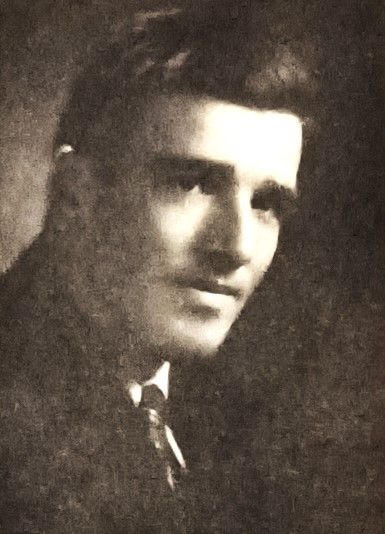
Everett Richard, Jr. Bancroft is honored on the following 1 monument(s) in our database:
Everett Richard “Dick” Bancroft, Jr. was born on August 24, 1916, in Coal City, Colorado, to Everett Richard Bancroft and Marianna Bierbauer Bancroft. His mother died in childbirth in 1918, and his father later married Laura Aebersold in 1922. He attended the University of Colorado's School of Pharmacy, graduating in 1939 and obtaining his pharmacist's license in 1940. He worked in drugstores in Denver and Fairplay, Colorado, before returning to the university to pursue graduate studies.
During World War II, Bancroft enlisted in the United States Army Medical Corps and was deployed to the Philippines, arriving on November 27, 1941, aboard the last ship to enter Manila Bay before the outbreak of war in the Pacific. He was assigned as a pharmacist to the Detachment Medical Department. By Christmas Day 1941, his unit had relocated to Bataan, where he served at one of the hospitals along the route later associated with the Bataan Death March. Following his capture by Japanese forces, Bancroft became a prisoner of war. In September 1942, he was among a group of American prisoners transferred to Prison Camp 10A in Puerto Princesa, Palawan, Philippines, where they were forced to construct an airfield.
On December 14, 1944, as Allied forces advanced toward Palawan, Japanese troops under the Fourteenth Area Army, commanded by General Tomoyuki Yamashita, carried out a mass execution of American prisoners of war to prevent their possible rescue. After sounding an air raid warning, Japanese guards ordered approximately 150 prisoners into shelter trenches before pouring gasoline into the shelters and setting them ablaze. Prisoners who attempted to escape the flames were shot by Japanese soldiers, while others tried to flee by climbing over a nearby cliff. Many of those who escaped the burning trenches were subsequently hunted down and killed. Of the approximately 150 American prisoners, only 11 survived, while 139, including PFC Bancroft, were killed in what became known as the Palawan Massacre. The survivors who reached southern Palawan received assistance from Filipino scouts and guerrillas under the command of Nazario Mayor, who helped them reach safety and eventual rescue.
PFC Bancroft's remains were subsequently interred at the Manila American Cemetery in Taguig City, Philippines. A memorial marker was also placed in his family's burial plot at Lakeside Cemetery in Cañon City, Colorado. Additionally, a collective grave containing the remains of 123 victims and a memorial honoring the 139 servicemen killed in the massacre were established at Jefferson Barracks National Cemetery in St. Louis, Missouri.
Sources of information: www.findagrave.com, www.abmc.gov, www.aihp.org